Whatever I Go Through, I Grow Through
So far, 2026 has felt like three different lifetimes.
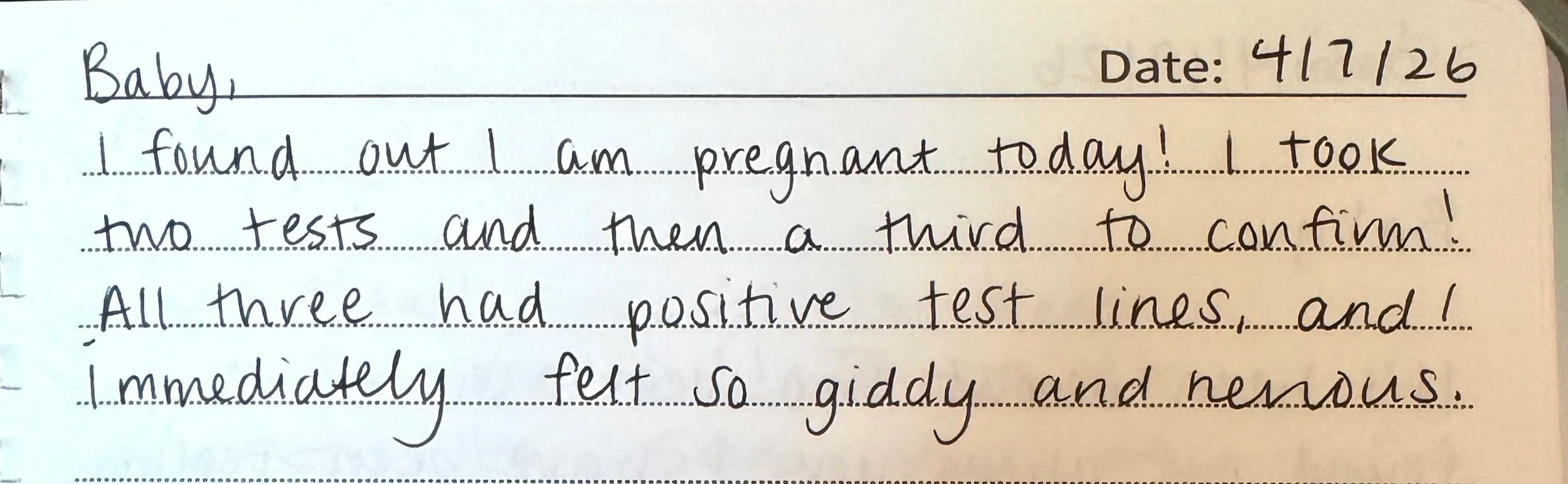
Very first entry for pregnancy journal.
In April, I saw two pink lines and my world quietly changed. My husband and I lived this sweet little life of planning and listing and tossing out name ideas whenever one struck us in the moment. Suddenly there was a tiny future living inside of me. A little peanut. My lil peanut.
On May 4, I miscarried. At my 12 week appointment, they did not find a heartbeat. Sadly it was written on the midwife’s face before it was verbally confirmed.
People say miscarriage is common. It is so common, in fact, that 1 in 5 women experience it. It is so common, that twenty percent of women opening themselves mentally and physically to grow life leave it entirely up to the universe.
Common doesn't mean people know what to say. Common doesn't mean that everyone knows how to hold grief.
I never was one to have good luck. My parents divorced young. I've had COVID more times than feels statistically possible. I’ve been diagnosed with panic and anxiety disorders despite being a very active yoga practitioner and energy worker. It is a frequent occasion for me to drop things, embarrass myself, be in the way despite trying very hard to not metaphorically (and physically) step on any cracks, walk under any ladders or break any mirrors. It’s actually a comedic bit in our household at how unlucky I have become, and when I find pockets of luck I definitely do not take them for granted.
I felt unraveled as a human — translucent — like all the nurses and happy couples were getting an exclusive look at my skeleton. We were in and out of Room 9. The walls were thin, and we could hear happy ultrasounds and heartbeats in the rooms adjacent to us while we sobbed. Everyone could hear our sadness, and we could hear their joy. It is cruel that in this world these things are able to exist side by side.
But maybe that's the lesson I'm still learning: joy and grief are almost always side by side.
The day of my miscarriage felt almost comically awful, if there can be comedy in tragedy. Naturally we went to get ice cream for dinner, and the high school lax bros behind the counter got my order wrong. After our routine evening walk around the neighborhood with the dog, my husband found a tick bite and ended up running to the ER for an emergency dose of Prophylaxis. I found a dead mouse behind the toilet while I was actively bleeding my unborn baby into it.
Life can be so painfully human.
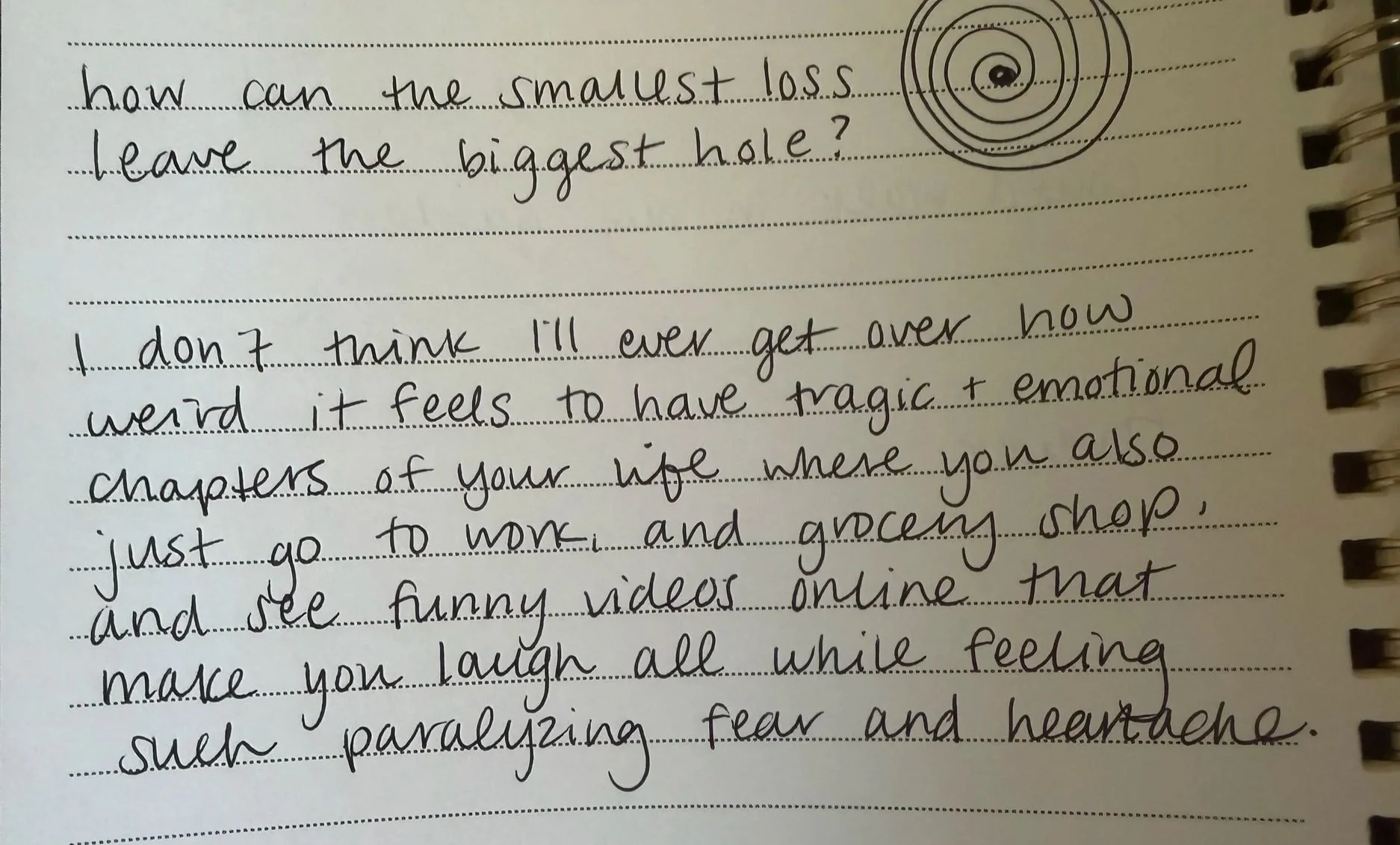
One week after my miscarriage.
That night, I was up until 3am, on and off the toilet. My uterus contracted with a force I didn't know it possessed — waves of pain that took every single breath and folded me in half. The only dose of relief came from laying on my right side curled around a balled up beach towel that had been soaked in icy water. I was hot and cold at the same time, shivering and sweating. It felt like my body was trying to give birth, except there would be no first cry, no congratulations and no baby placed in my arms.
The absurdity of it all still haunts me. My body was doing what bodies have done for thousands of years: contracting, laboring and pushing something out. I was experiencing a kind of birth, but one that ended in silence. No one tells you that a miscarriage can feel like labor — that your body can experience the violence of birth and the emptiness of not bringing anyone home.
There are pieces of grief that live in the body. And there are pieces that live in the small moments afterward.
The next day, to clear our minds the best way we knew how, we dove into some yard work. (Medically speaking I should have stayed in bed but sometimes you just need to distract anyway you know how). Amongst our silent work, we would stop for minute here and there to hug and hold each other. During one of these moments, we noticed three crows made an arrival and sat in the tree above us. We watched them for a moment. Then two flew away and one stayed.
We held each other and cried.
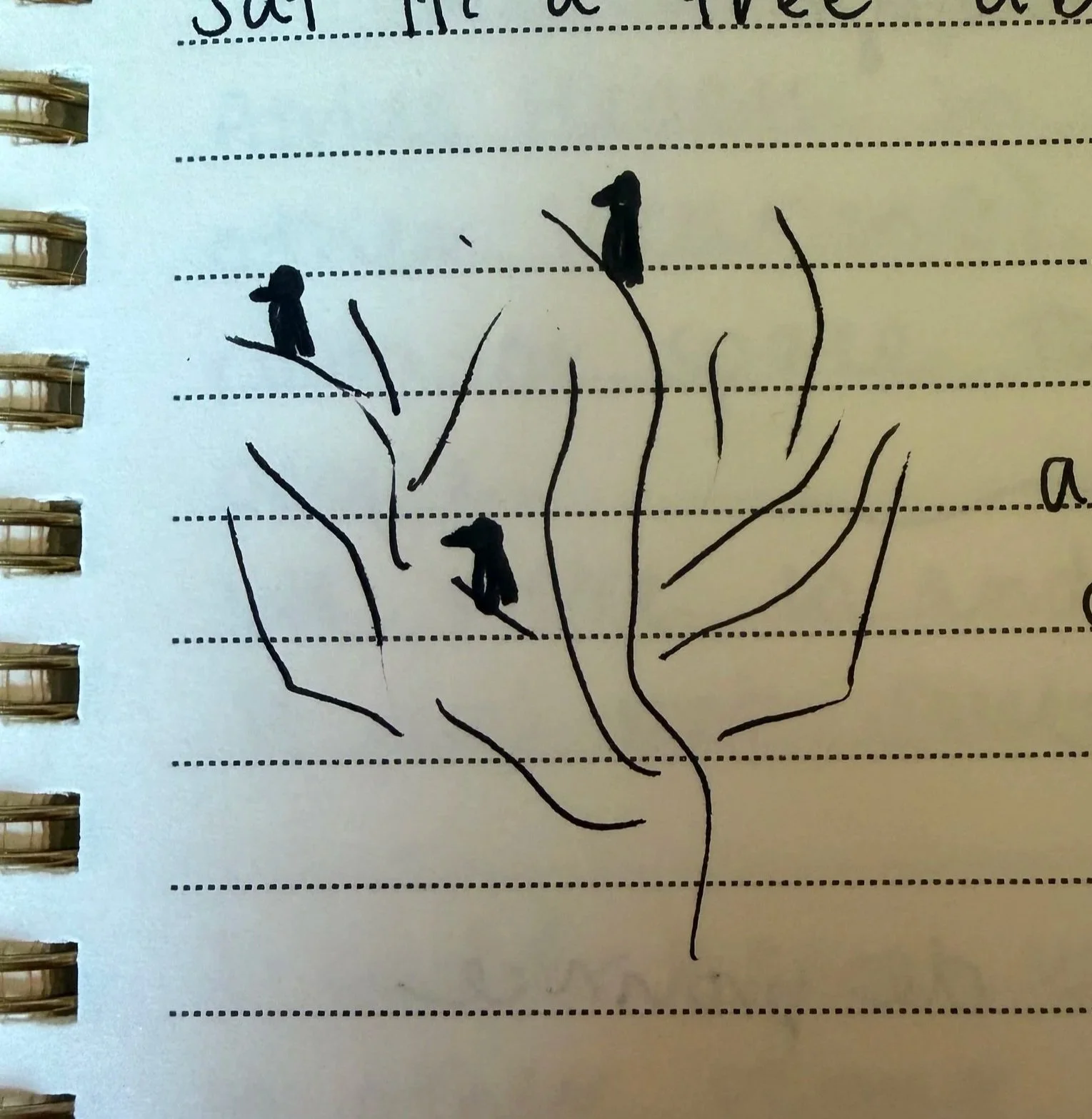
Three crows in a tree.
She remained for another minute or two, almost like it was letting us mourn with her. Then she flew over us, spread her wings wide like a big smile, and disappeared into the sky.
I don't know if signs are real. Maybe it wasn't meant to be. Maybe it was.
Maybe grief makes us look for meaning in birds and fortunes and the way sunlight hits the yard.
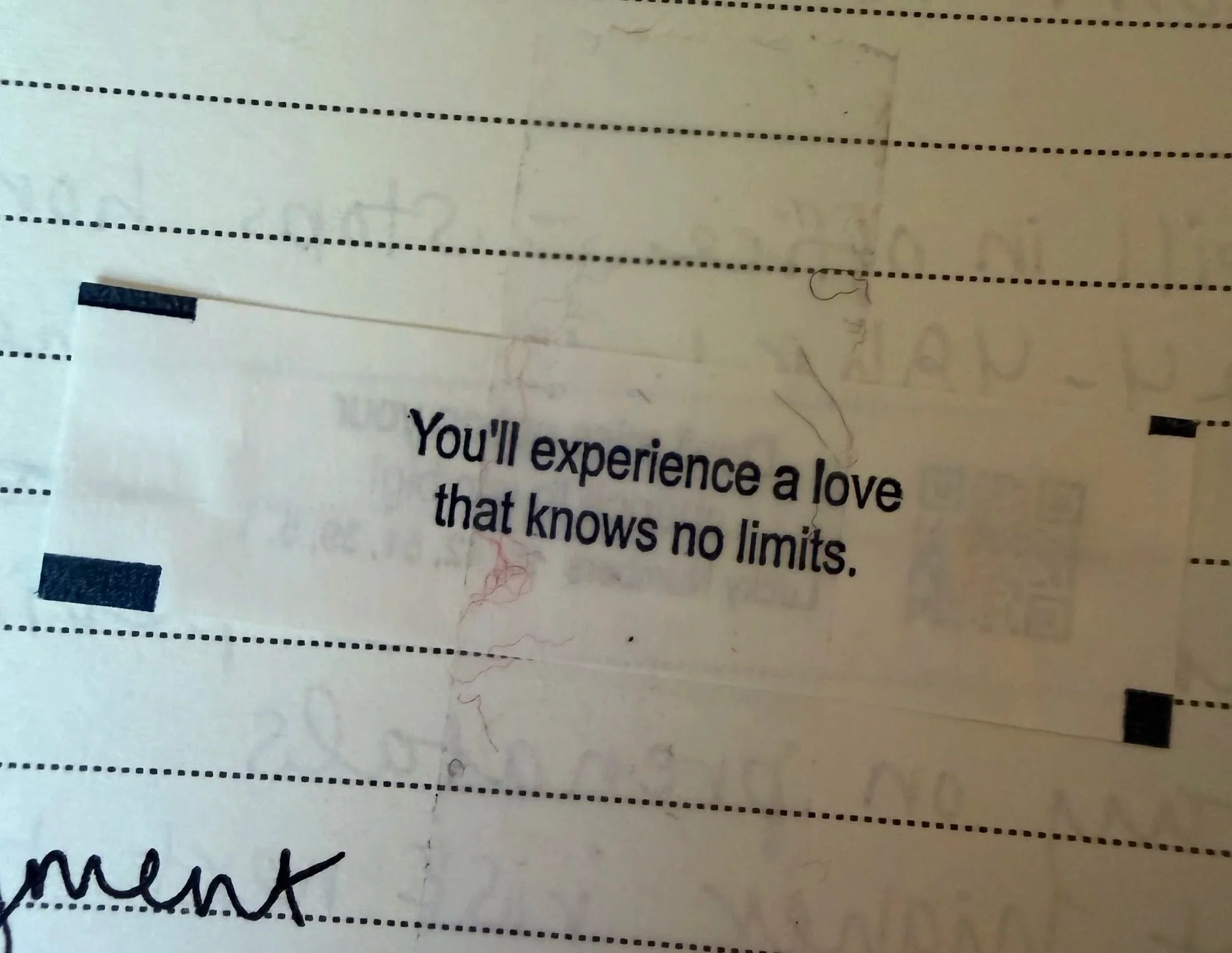
Chinese cookie fortune.
A few days later, I cracked open a fortune cookie that read: You will experience a love that knows no limits.
I think about that often. Because I did experience a love that knew no limits. It existed for only 10 weeks and 2 days, but it was real.
And then, in mid-June, life shifted again.
I was diagnosed with Hashimoto's disease, an autoimmune condition where my body, confused and exhausted, attacks itself. It felt strangely fitting. My body and I have been learning a new language this year. One of loss. One of betrayal. One of healing.
Looking back, there had been whispers. The fatigue that made me think I was simply entering my thirties and becoming a professional cat-napper. The brain fog that made me lose words mid-sentence. The sensitivity to cold that had me reaching for another blanket while everyone else seemed perfectly comfortable.
I thought these things were quirks. Personality traits, even. Apparently, you are not supposed to be tired all the time.
If I'm being completely honest, it was easiest to blame the miscarriage on Hashimoto's. Maybe easiest isn't the right word. Convenient, perhaps. The diagnosis arrived with perfect timing, handing me something tangible to point at. A villain. A reason. I wanted something to blame because the alternative—that sometimes terrible things happen without explanation — felt much harder to carry.
I still don't know if Hashimoto's played any role at all. Maybe it did. Maybe it didn't. But grief desperately wants a why, even when there isn't one.
I am only two months out from my miscarriage. I am not back to myself and I am not back to my routines. I am definitely not back to reality and sadness still arrives uninvited.
People ask me how I am, and almost every time I say, "I'm fine." Not because it's true, but because explaining is exhausting. Because sometimes I don't have the energy to unpack the last two months in the middle of the farmers market or over a Facetime. Because I don't want to make someone uncomfortable. Because I don't want to become the person who is always sad, always grieving, always carrying around bad news.
So I say, "I'm fine." And in many ways, I am. And in many ways, I am not.
Friends, family and colleagues have announced pregnancies and shared stories of being in the newborn trenches. I have smiled and celebrated and meant every word. And afterward, I have cried.
And then, in the quiet moments, I have interrogated myself. Was I excited enough? Did I ask enough questions? Did I spend too much time being anxious and not enough time being grateful? Did I somehow love this little life incorrectly?
Grief is cruel like that because it can turn you into your own detective, searching old memories for clues and assigning meaning to things that never meant anything at all.
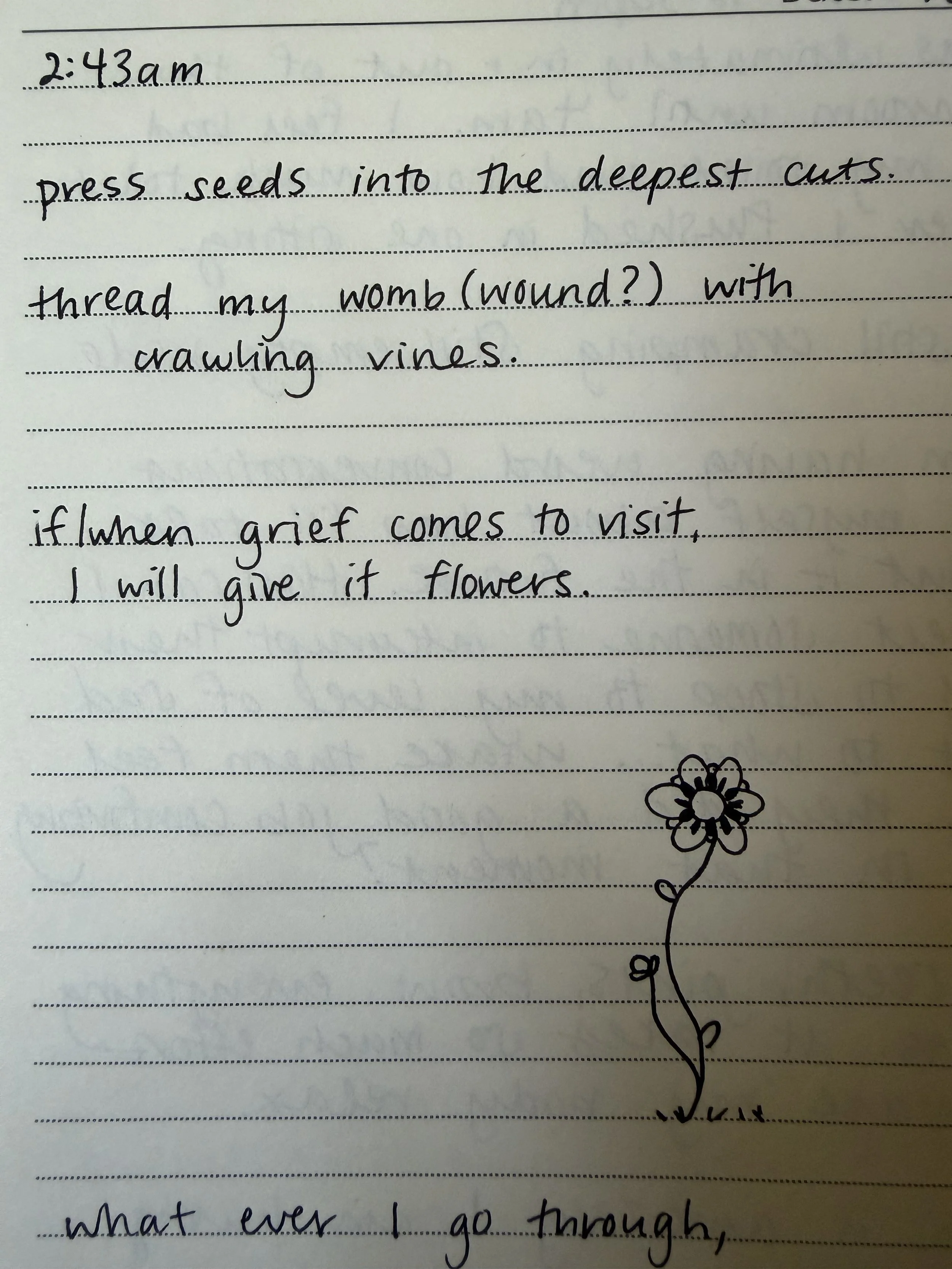
Insomnia brain dumps.
I know, logically, that my excitement did not determine my outcome. But, alas, grief isn't logical. It asks impossible questions and then sits patiently, waiting for answers that do not exist.
I miss the version of myself who thought two pink lines and a due date were guarantees. Before this, pregnancy felt like a promise. Now I know it is also a massive leap of faith.
I am happy. I am sad. I can be both at the same time.
Grief has taught me that two opposing truths can exist together.
I can be grateful and angry.
Hopeful and heartbroken.
Healing and hurting.
I think often about these words I wrote on a page in my journal:
Press seeds into the deepest cuts. Thread my womb (wound?) with crawling vines. If grief comes to visit, I will give it flowers.
I don't want this pain to harden me because eventually I want it to grow something from this lonely space. Compassion. Tenderness. Patience. A deeper understanding of what it means to be human.
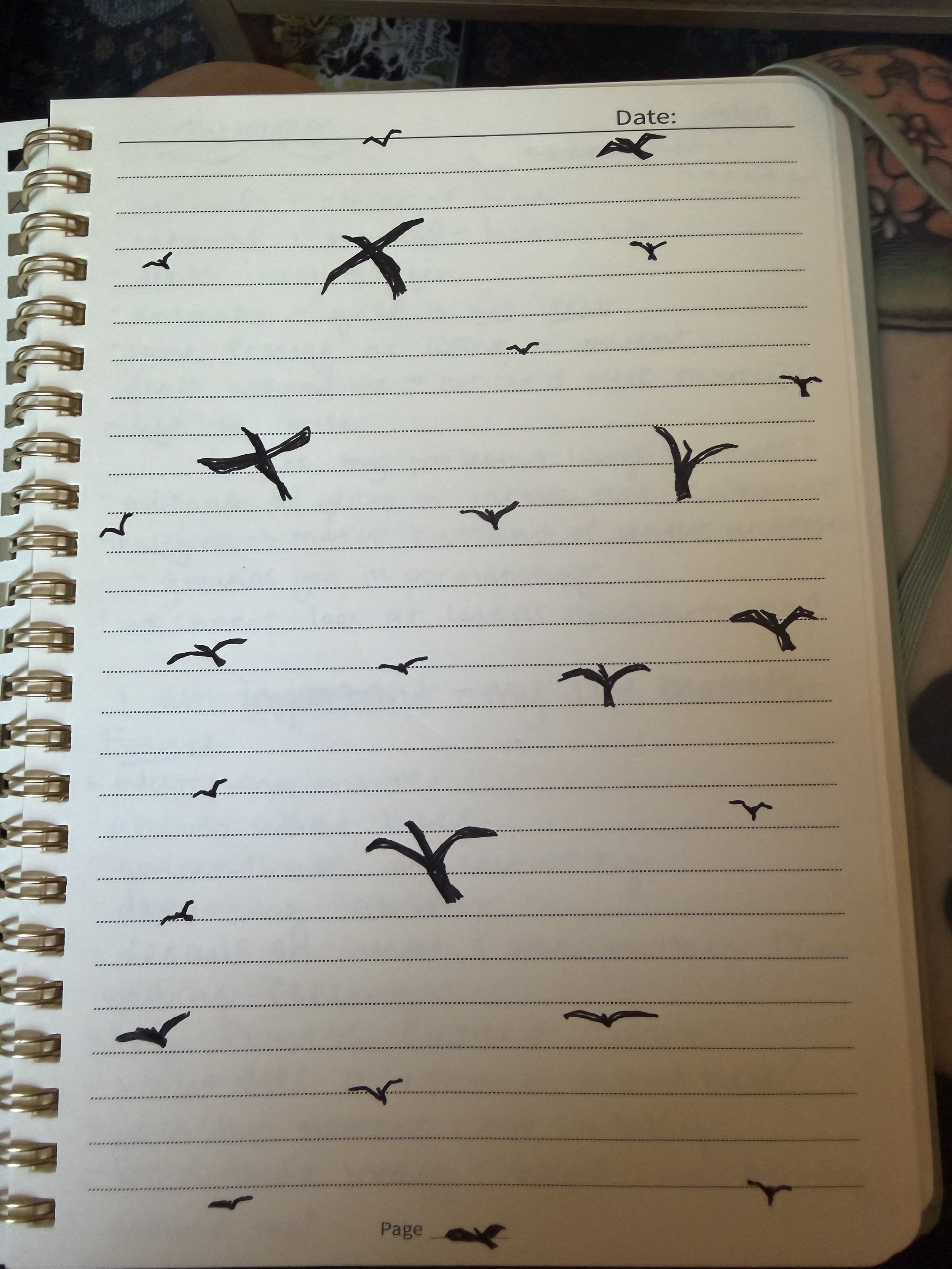
Birds.
I don't think grief changes who you are as much as it introduces you to parts of yourself you never expected to meet. There is a version of me that existed before Room 9, and I don't think she and I are exactly the same person anymore.
Whatever I go through, I grow through.
I don't know what the rest of this year will hold. I don't know what my body is capable of. I don't know when I'll feel completely like myself again.
But I know this: Love existed here. Loss existed here. Hope exists here too.
And maybe that is what growing through something looks like — not leaving it behind, but learning how to carry it forward.